
The Centre and state governments bonded and then fell apart during the longest lockdown walk.

While some researchers are developing prototypes for ventilators to overcome their shortage, others have teamed up to develop testing kits.
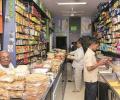
'90 per cent of the food and grocery business is still with the kiranas.' 'If kiranas are not allowed to operate, it becomes a serious issue.'

However, many of these firms were facing an uphill task of convincing the people on the ground to return to work, as many are apprehensive of their safety.

'We are going to be overwhelmed by the need for hospital beds. There are simply not enough beds in government hospitals.' 'We will need a large number of medical professionals and without the private sector's involvement, the government won't be able to expand capacity.'

Around 81 per cent of the workers constitute the unorganised sector - devoid of any social security cover and outside the purview of a complex set of labour laws.

There is a lot of police action on the ground and even inter-state movement has been stopped, because of which deliveries of essential items via platforms, such as Flipkart, Amazon, Grofers, and Milkbasket, aren't happening. Food-delivery firms -- Swiggy and Zomato -- are facing similar challenges, according to the sources.

According to a survey by community platform LocalCircles, early-stage start-ups, funding dependent start-ups and many small businesses will soon be fighting for survival as the spurt in coronavirus cases hits them hard.

Bengaluru-based Healthtech start-up Mfine has rolled out a coronavirus assessment feature which enables virtual medical consultation to assess patients who have flu-like symptoms. Portea and Haptik habe developed chatbots, which will disseminate information related to coronavirus.

The Seventh Pay Commission had decided to choose the CPI-IW as the index for adjusting inflation for central government employees.
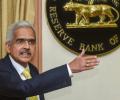
Taking advantage of the RBI's different accounting year, the Centre had started demanding an interim dividend till the time the latter's final balance sheet is prepared (usually in August). To address this anomaly, an expert committee led by former RBI governor Bimal Jalan had recommended aligning the RBI's financial year with that of the government.

Facebook-owned messaging service WhatsApp has secured regulatory approval for launching its digital payment platform -- WhatApp Pay -- in a phased manner, close to two years after the US-based company's pilot run.

The government has found about 900,000 beneficiaries of its flagship job formalisation scheme, the PMRPY, were ineligible in the first place as they were part of the formal economy even before the inception of the scheme. The EPFO has also recovered Rs 222 crore so far from the employers concerned.

'The banks cannot pass on the hike in premiums to its customers, according to the norms. The premium won't go up substantially in any case and may be hiked to 12-13 paise (per deposit of Rs 100 a year),' Finance Secretary Rajiv Kumar said.
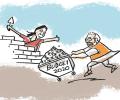
Apart from making your purchases on these platforms expensive, it will also mean sellers will have to face the brunt of reduced cash flows amid already low margins for some. Experts said the proposal, which will take effect on April 1, 2020, and will be inserted as a new section in the Income Tax Act, is expected to affect the working capital of e-commerce companies and reduce cash flows for e-sellers.

This demand comes at a time when the government is falling short of its revenue targets due to dwindling tax and low disinvestment receipts. It could account for the dividend in the upcoming Union Budget on February 1. RBI is, however, yet to take a final call on the government's demand and might decide on this at its central board meeting scheduled for February 15 in New Delhi.

The banking regulator is seeking an early exit mechanism for private banks under Prompt Corrective Action.

C P Chandrasekhar, who has served on key statistical panels in the past both as a chairman and member, said he was present in the campus when the ruckus broke out on Sunday and found the incident "disturbing" and "unprecedented", and that it further undermined the faith in the system. Somesh Jha reports.

The company, which rents cars by the hour, day, week and month, has Mahindra E2O Plus and Tata E Tigor available on the platform for which it charges a subscription fee of Rs 15,000-20,000 per month.

The net NPA ratio declined to 3.7 per cent in September 2019 from just below 4 per cent in March 2019, reflecting increased provisioning.
 © 2025 Rediff.com - Investor Information - Advertise with us - Disclaimer - Privacy Policy - Sitemap - Feedback - About us - Terms of use - Grievances